• ‘The Pianist’ (b. 5.12.1911) and his Red Bus

Thanks to an alert last night from a friend in Warsaw, I was reminded that today marks the centenary of the birth of Władysław Szpilman (1911-2000). Szpilman was well-known in Poland from the 1930s as a fine concert pianist and as a composer of concert music and popular songs, especially after World War II.  He recounted his extraordinary survival of the war in his memoir Śmierć Miasta (Death of a City).  The memoir was republished in English as The Pianist shortly before his death and turned into an award-winning, internationally popular film of the same title by Roman Polański (2002), with Adrien Brody playing the lead role.

I once sat behind the quiet, elderly Szpilman at a concert in Warsaw.  I regret not speaking to him.  Later, I wanted to reproduce the opening page of one of his songs – Jak młode Stare Miasto (Like The Young Old Town, 1951) – in my book Polish Music since Szymanowski (Cambridge, 2005).  But permission was refused by his family as they thought that some of his songs were not representative of his talents (and also perhaps because 1951 was the height of the socialist-realist push in the arts). Yet this hugely popular song had already been released on CD (‘Golden Hits of Socialism’ [!], Intersonus ISO84).  Such is the unpredictability of copyright permission.

In 2000, Polish Radio issued a 5-CD set of Szpilman’s performances and compositions (PRCD 241-245):

• CD 1: 19 songs (1952-91).
• CD 2: Szpilman as pianist – including in his own Concertino (1940), Rachmaninov’s Rhapsody on a Theme of Paganini (1954), Schumann’s Fantasy in C Major (1960) and two pieces by Chopin, including the Nocturne in C# minor (1980) with which he both closed Polish Radio broadcasts in 1939 and reopened them in 1945.
• CD 3: Szpilman as a member of the Warsaw Quintet – piano quintets by Brahms and Schumann (1963-65).
• CD 4: Szpilman with Bronisław Gimpel (who also led the Warsaw Quintet) – violin sonatas by Brahms (no.3), Grieg (no.3) and Franck (1958-65).
• CD 5: songs for children including three extended ‘musical fairytales’ (1962-75).

One of Szpilman’s most popular songs was Czerwony Autobus (The Red Bus, 1952).  The recording on CD 1 above is particularly fine, not least because of its sense of good humour, considerably aided by Szpilman’s own swinging piano.  Search it out if you can.  That recording was made by the best close-harmony male-voice quartet of the time, Chór Czejanda (Czejanda Choir).  They also made another, longer recording with dance orchestra.  In the YouTube video below (Legendy PRL: Legends of the Polish People’s Republic), this audio recording is accompanied by shots of Warsaw buses in various ‘picturesque’ locations of the post-war socialist capital.  I’ve put my translation of the first three verses below.  Enjoy!


When at dawn I run like a wind through the streets,
The city like a good friend welcomes me,
And – honestly – I wish you all such happiness
As every day gives me in Warsaw.

On board, please!  No-one will be late for work,
We will go quickly, even though we’re surrounded by a forest –
A forest of scaffolding, which really does mean
That here time does not stand still.

The red bus rushes along my city’s streets,
Passes the new, bright houses and the gardens’ cool shade.
Sometimes a girl will cast us a glance like a fiery flower.
Not only ‘Nowy Swiat’* is new – here each day is new.

* ‘New World’, a beautiful old street in Warsaw, reconstructed after the war.  It appears at 2’01” in the video above.

[For more information, go to http://www.szpilman.net/]
• To the woods

Twenty years ago, in a break from a broadcasting and media conference in Toronto, I hired a car and drove to the northern outskirts of the city.  I’d heard word of a gallery in Kleinburg – the Canadian Art Collection begun in 1965 by Robert and Signe McMichael – featuring paintings by Canadian landscape artists from the 1910s and 20s.  Nothing prepared me for the immediacy of the work of Tom Thomson and, to differing degrees, of other artists such as Franklin Carmichael, Lawren Harris, A. Y. Jackson and J. E. H. MacDonald.  I remember afterwards driving much further out, in the direction of the Algonquin Park, and getting out for a long and rough scramble off the beaten track. It was autumn, so the colours outside were as vivid as those of the paintings I’d just seen inside the McMichael Gallery.

These memories came flooding back at the Dulwich Picture Gallery this week when I went to see ‘Painting Canada’ (19 October 2011 – 8 January 2012).  Although I find the Gallery’s special exhibition space cramped and its monitoring of visitors unduly zealous (an unexplained ban on shoulder bags, close patrolling by ear-pieced attendants), the art itself is greater than these unwelcome intrusions.

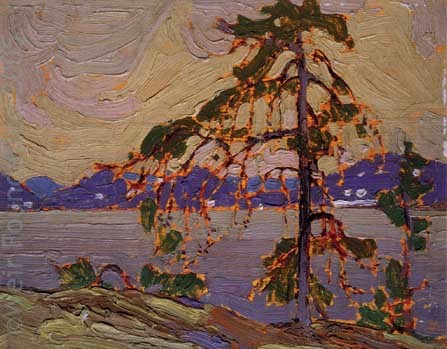
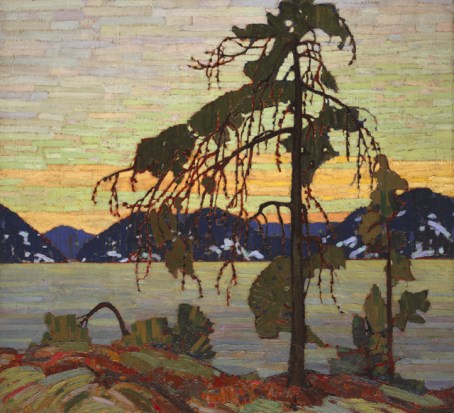
Not for nothing is the exhibition subtitled ‘Tom Thomson and the Group of Seven’.  Thomson (1877-1917) rightly takes pride of place.  His most famous large-scale oils, both from 1916 – The West Wind and The Jack Pine (below) – face the visitor in the first room.

At the opposite end of the gallery – and of the stylistic spectrum – are the abstract landscapes that Lawren Harris painted c. 1923-31.  They made a distinct impression on me both then and now, first among them the many versions of his view of Mt Lefroy in Western Canada.

The really fascinating and revelatory element in ‘Painting Canada’ are the many so-called ‘sketches’ made by Thomson on his forays into the wilderness, primarily in Algonquin.  These were painted on wood panels c. 8.5″ x 10.5″.  His paint box, with measurements to match, had several slots in the lid into which he could place his most recent panels to dry safely while he set to work on the next.  Some three dozen such ‘sketches’ are exhibited, several of them with larger-scale canvases based on them displayed alongside.  This affords a detailed comparison.  For my money, the plein-air sketches win hands-down every time.

I was curious to understand why this should be so.  Thomson’s views of the wild, chaotic scenery of lakes, trees and scrub are always vibrant.  But the panel sketches are even more alive.  I suddenly realised why.  Thomson seems to have painted straight onto (what now are the golden-orange) panels, with no colour wash.  He sketched the primary tree shapes in the foreground and middleground in blacks and whites (silver birches were his favourite subject). Then, in thicker strokes, he added the horizontals between the verticals – sky, hills, lakes, scrub.

The revelation came when I realised that the vivacity of these sketches came in large measure from the unwashed panel background.  The mainly horizontal brush strokes filling the space between the verticals do not stretch to the edge of the trees, as can be seen in April in Algonquin Park (1917, above).  This gives the trees an almost tangible vibrancy, as if they are in motion.  Some might see such spaces as auras, because the panel’s colour lends a warm, potent glow to the image.

Somehow, this elasticity became ironed out when the image was transferred onto a large canvas.  Compare the iconic The Jack Pine above and its sketch (1916, below).  I know which one speaks more eloquently to me (and it’s also because of the more violent brush strokes for the land, water and sky).

The Dulwich exhibition is well worth a visit.  Just try to go when it’s not crowded.  The catalogue is excellent.  The books that I bought in Canada twenty years ago are also excellent, although I don’t know if they or any revised versions are still in print: The McMichael Canadian Art Collection (25th anniversary edition, Toronto, 1989) and Tom Thomson: The Silence and the Storm (3rd edition, Toronto, 1989).

Postscript

Anyone interested in the history of the McMichael Collection – which is the major contributor to the Dulwich exhibition – should read Mary Ambrose’s article ‘War of Independence’ (The Independent magazine, 12 December 1998, 31-34).  She discusses the often bitter battles fought between the McMichaels and the provincial authorities over the principles of the collection, a battle which seems to have been airbrushed out of today’s official profile of this unique artistic endeavour.

• Hyde Park Corner

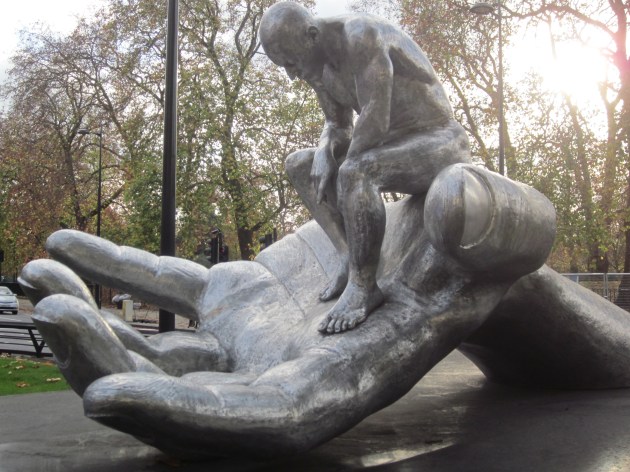
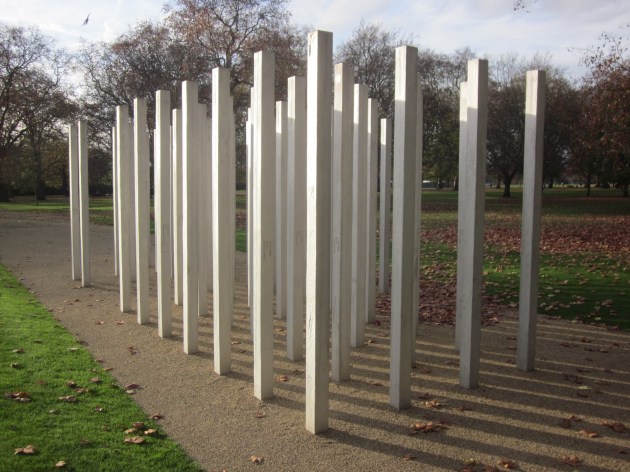
Hyde Park Corner, London: one transient sculpture, one permanent memorial.  Lorenzo Quinn’s Hand of God will subsequently be installed at the Royal Exchange.  The 7 July Memorial, dedicated to the 52 victims of the London bombings in 2005, was unveiled two years ago.  Each has its own poignancy.

IMG_5045 copy
IMG_5041 copy
IMG_5042 copy

IMG_5051 copy


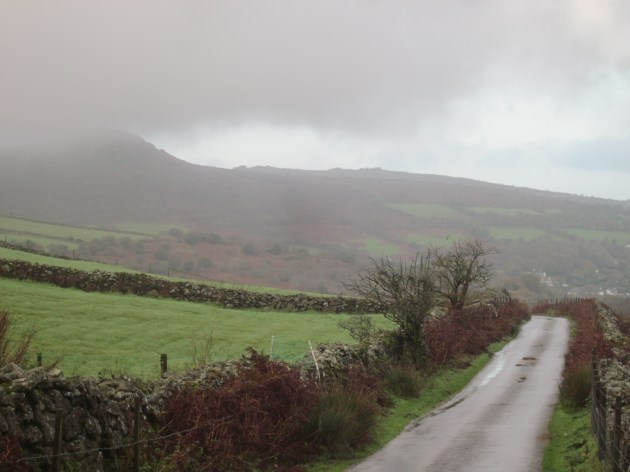
• Sharp Tor under rain cloud

On the way back from collecting the paper, looking north.

IMG_5019 copy

• A stroll up Bearah, plus monument

On a familiar stroll up to Bearah Tor, I passed the fairy grove of oak trees, the early stages of what will be a pointy monument at Hayling Island in Hampshire (to be dedicated to the heroes of COPP – Combined Operations Pilotage Parties – during World War II) and on up to the small, long-disused upper quarry that is now filled with water.

IMG_5014 copy

IMG_5015 copy

IMG_5017 copy


• The Colour of Bracken

Bracken seems to have very little to commend itself.  It’s invasive and takes over where there is no animal grazing.  I used to think that it was a useless plant.  It’s certainly dangerous to many animals, as well as potentially harbouring deer and sheep ticks that can cause Lyme disease.  But it’s a food plant for the caterpillars of quite a few species of moth and butterfly, so it’s not all bad.

It appears in May, after the bluebells.  First there’s a little hoop in the grass, then – pwhang – it uncoils, straightens its back, and shoots up faster than you can say ho-ho-hum.  Before you know where you are, its jungles can tower above you.

However, autumn and winter present a different story.  I’ve been surprised how short-lived bracken is.  Here on the moor it starts turning in August and the decay accelerates through October.  Suddenly vistas open up, grassy paths become clearer.  Initially, this decay seems featureless, but I’ve learned to look out for something extraordinary. Between now and next April the bracken will provide the most beautiful array of colours and shapes.

At the moment, the stalks have turned pale lemon-yellow.  Later they’ll become dark, burnt orange to purple-black, often broken over mid-stem by the wind, creating a dramatic canvas of criss-crossing diagonals and verticals.  Some of the fronds have already gone a mid-brown, matt-dull, while others cling on to vestiges of their summer colour, freckled with age spots and yellows as the sap drains out.  But in the sunlight they glow as they die.  Best of all is the effect of a heavy shower of rain, which restores lifeless colours to a point of magnificent saturation.  At such moments one can almost forget, but not forgive, the pest that will spring forth and claim more territory next year.

• it seems to me …

It seems to me, with the wind howling and the rain driving all before it on this bleak October day, that this is a good moment to stay indoors and shift my blogging to a dedicated provider rather than bury it in my iWeb site.  Better that than go for a walk along the Cornish cliffs, where you never know what might happen.


This footage was shot a month ago, on 23 September 2011, at 17.00, looking north east.  It’s on a section of the north coast in West Cornwall, where the cliffs are formed of slate.  It’s called Dead Man’s Cove.  No-one died.  No animals were hurt.  But some of the human ‘noises off’ might suggest otherwise.

Cornwall Community News carried the full story, with pictures, on 15.10.2011.

• Sharp Tor at dawn

This is one of my favourite views of Sharp Tor, from the road between Higher Stanbear and Henwood.

IMG_4981 copy

• Tindal’s Continuation

On a visit to the always fascinating interior of Lanhydrock House n, I made a beeline for a little side-room where hangs a huge map of the West Country made by the 18th-century cartographer Robert Tindal, his ‘Continuation of Mr Rapin’s History’.  Here’s a close-up of eastern Cornwall.  It’s centred on my part of the county and displays a certain vagueness in its placement of features.  A few spiky rocks mark ‘The Hurlers’ near what is now Minions, although for reasons of space the name is placed in a giant curve to the north.  But it’s interesting to see it highlighted as a significant feature.  And I’m taken with the spelling of my nearest town, Leschard.  There’s also an interesting and – to me – unfathomable road linking Tavistock with Bodmin, running north of Killington (Callington) and between The Hurlers and Liskeard.  I wonder how accurate that is and where it passed through.

IMG_4944 copy

Tree Shapes (Heligan)

Part natural, part human: the shaping of trees, out of the ordinary and down in the valley at the Lost Gardens of Heligan.  The ‘human’ involved is the artist James Eddy.

IMG_4881 copy

IMG_4878 copy