• Hands off Brown Willy

[reprinted from The Telegraph, 5 November 2012]

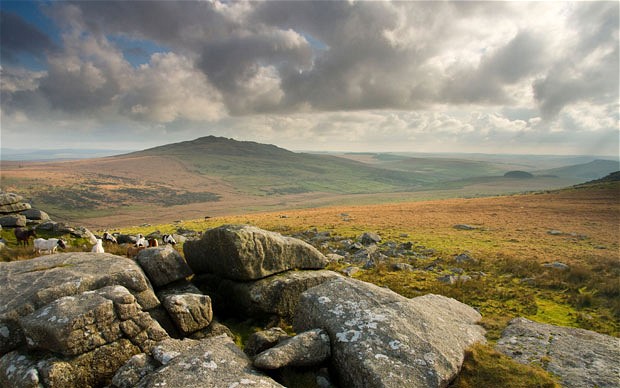
The people of Cornwall, or some of them, want to change the name of Brown Willy on Bodmin Moor, at 1,378ft, the highest point in the Duchy.  The motive is to stop people sniggering.  It is pointed out that in Cornish the name is Bronn Wennili, “hill of swallows”, which has pleasant associations.  But can place names simply be changed?  This is not the Soviet Union.  Places are what people call them.  If we are the first generation of adults who, like the comic book character Finbarr Saunders, see double entendres everywhere, what is to become of Great Cockup and Little Cockup in Cumbria; Crapstone, Devon; Penistone, South Yorkshire; Brokenwind, Aberdeenshire; Shitterton, Dorset; North Piddle, Worcestershire; Nether Peover, Cheshire; Slack Bottom, West Yorkshire; Pratts Bottom, Kent; and Titty Hill in West Sussex?

…….

[cornishadrian] … and, while we’re about it, let’s revert Bodmin Moor to the original ‘Foweymoor’ (= Fo’ymoor) and name it after its river like ‘Exmoor’ and ‘Dartmoor’.  For one thing, ‘Bodmin Moor’ was an Ordnance Survey invention of 1813.  For another, linguistically ‘Foweymoor’ flows, while ‘Bodmin Moor’ is lumpy.

• November Woods

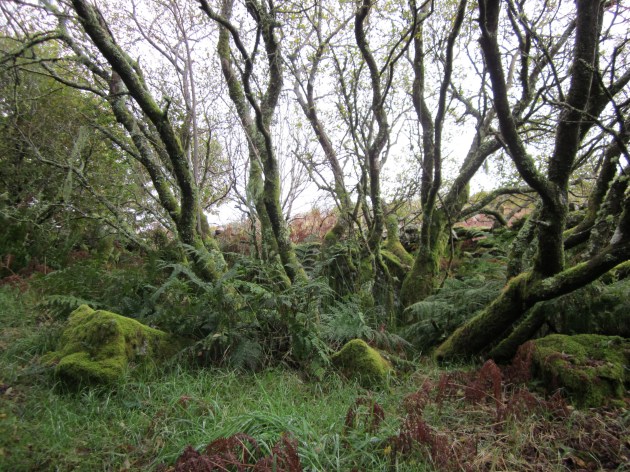
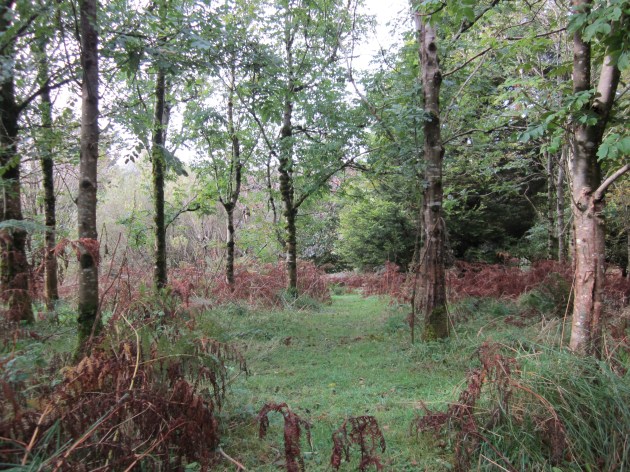
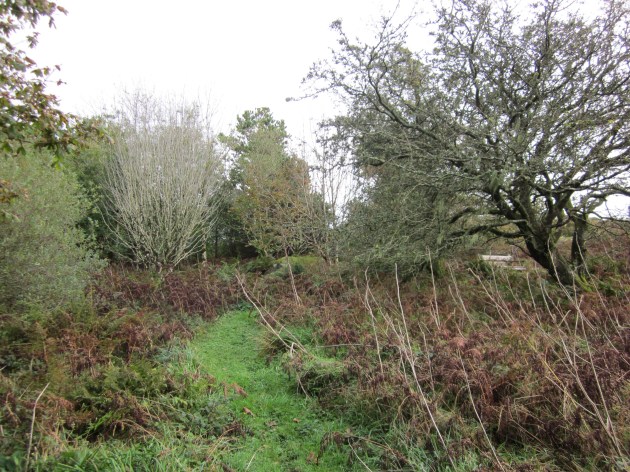
Three photographs from a short walk in the wood late this afternoon, plus Bax’s tone poem, with the Ulster Orchestra conducted by the masterly Bryden ‘Jack’ Thomson 30 years ago.  Not that Bax and Elliott Carter had anything in common, but as I’ve just heard that Carter died earlier today, this comes also as a small tribute and farewell.


• David Nash at Kew

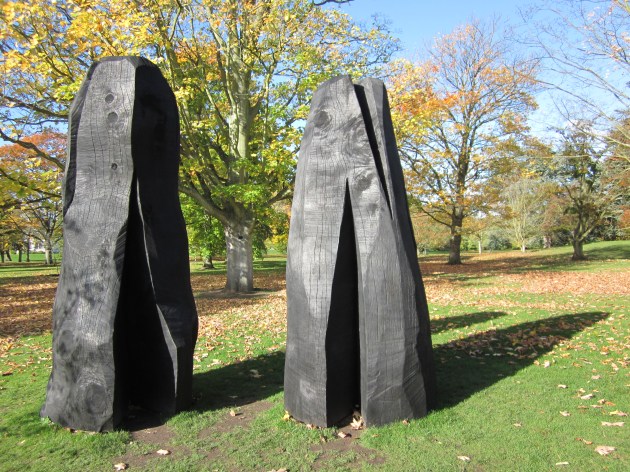
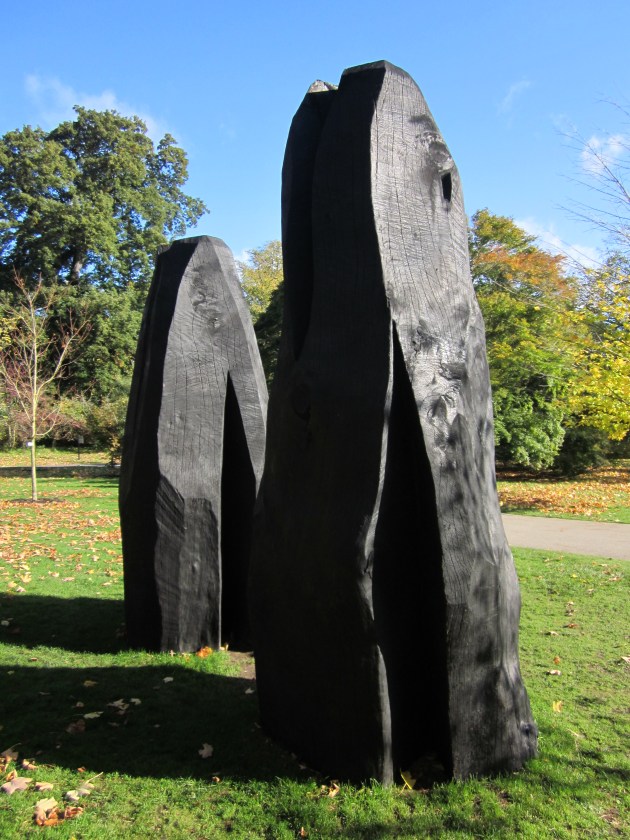
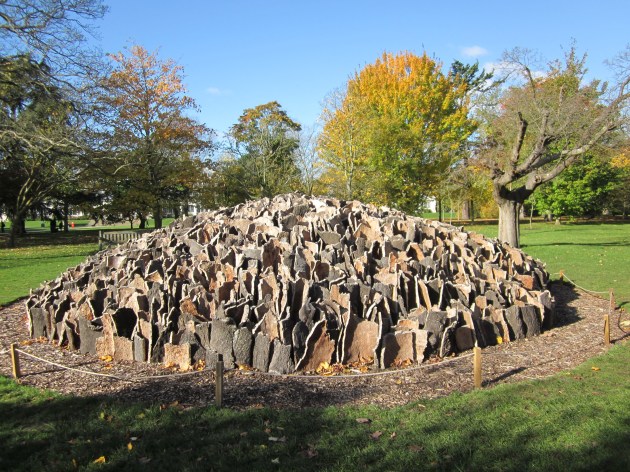
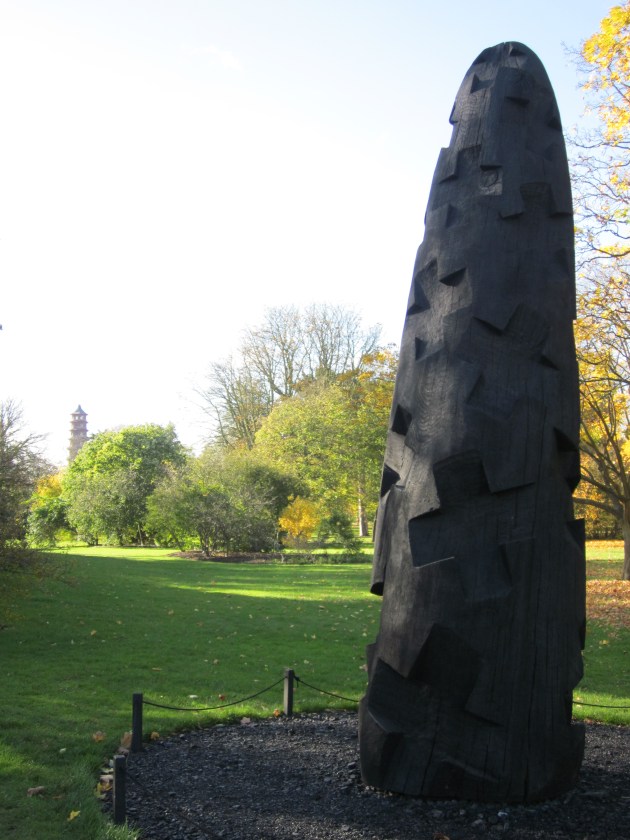
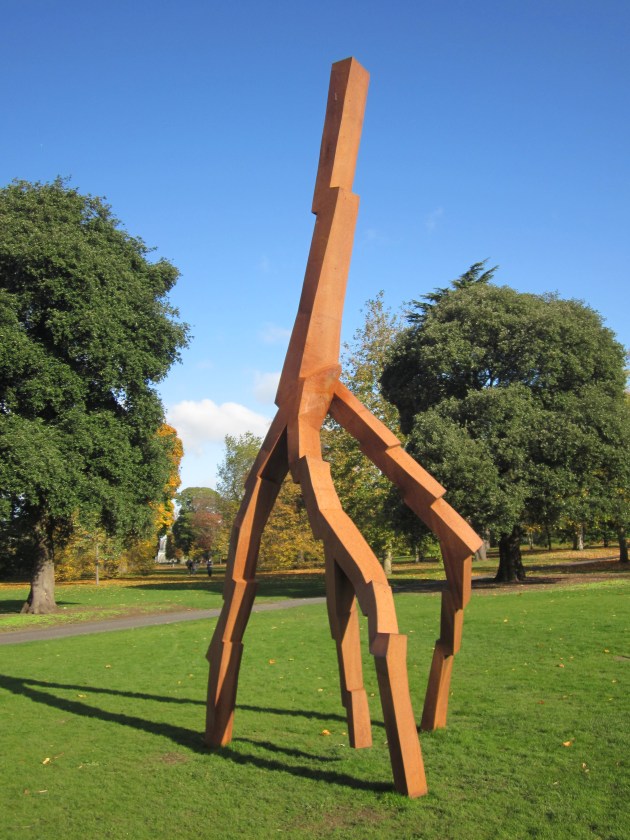
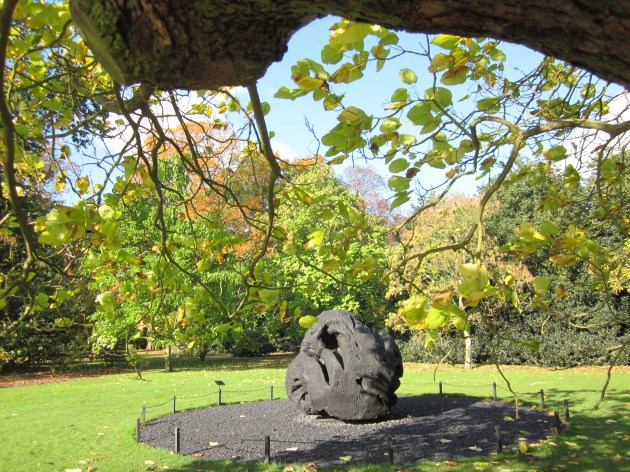
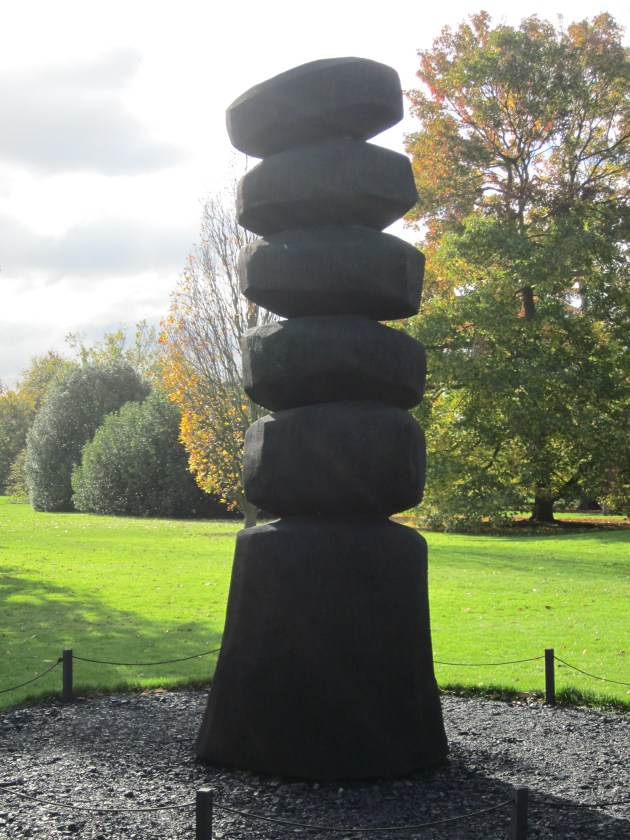
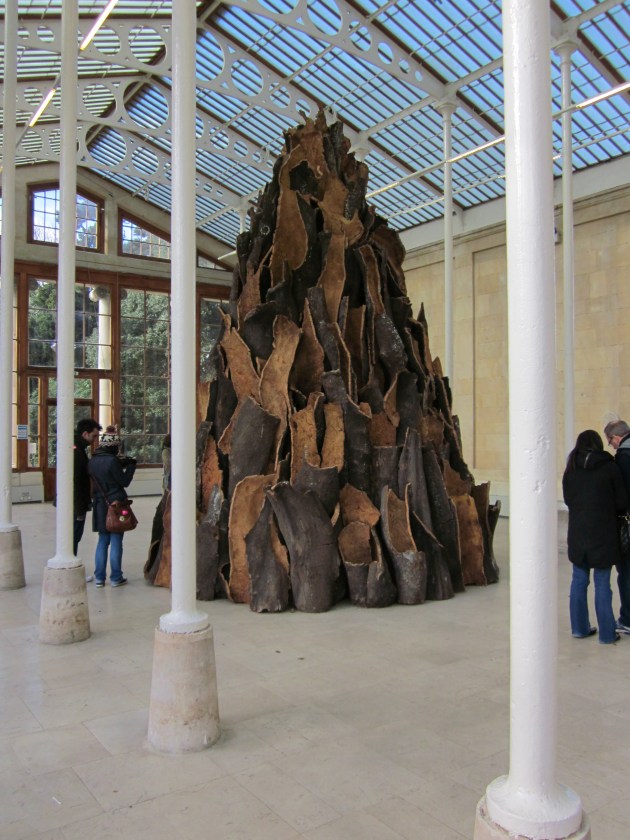
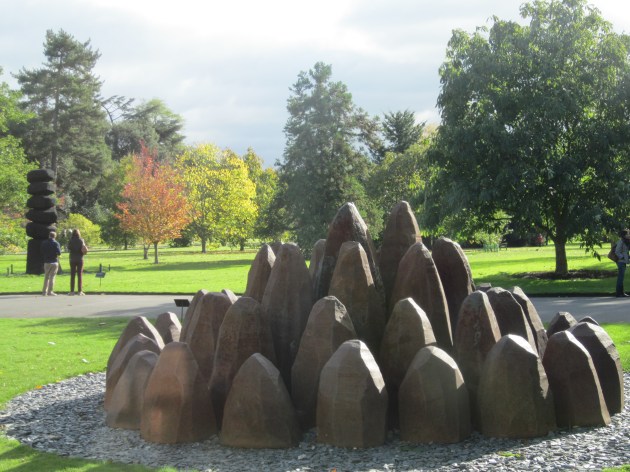
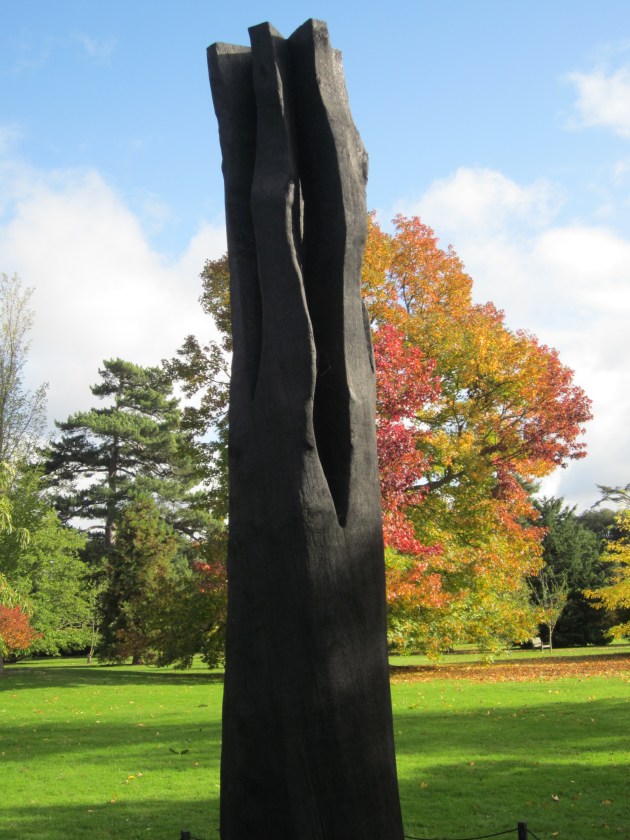
Some snaps of David Nash’s current exhibition of wood sculptures in Kew Gardens – and one living form.IMG_1064 copy

IMG_1067 copy

IMG_1069 copy

IMG_1070 copy IMG_1075 copy

IMG_1078 copy

IMG_1080 copy

IMG_1085 copy

IMG_1092 copy

IMG_1098 copy

IMG_1100 copy

IMG_1106 copy

IMG_1121 copy

IMG_1124 copy

IMG_1127 copy

IMG_1129 copy

IMG_1138 copy

IMG_1142 copy

IMG_1146 copy

IMG_1149 copy

IMG_1157 copy

IMG_7042 copy

IMG_7046 copy

• Five Trees Shaded in Grey

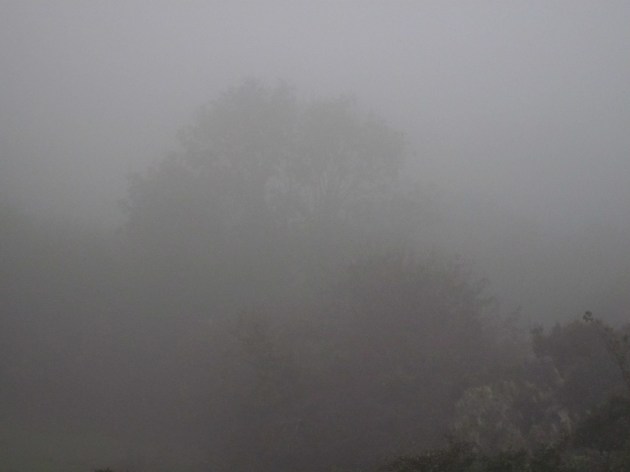
It may also be dim and dank, but there’s more sense, strength and atmosphere in this autumnal mist (six o’clock this evening) than in you-know-what.  And that’s not to mention EMI’s tawdry decision to release an oh-so-safe CD of the novels’ ‘sound track’.  Heaven help anyone whose appreciation of its music is now irreparably conditioned by the novels.  As I wrote to one friend, the CD will win an award at next year’s Classical Brits, mark my word.  Give me a dim and dank Cornish mist any day.  I’ll now go and join the harrumphing horses in the field beneath the trees.

• Turning Trees

I’m never quite sure what to make of autumn.  Part of my spirit sinks, but another part is captivated by its combination of desolation and beauty.  This afternoon, I went for a walk in the wood, brushing against bracken that is now a dirty brown.  It’s a plant which my neighbours sometimes cut back during the summer or spray to kill it off.  I don’t like it much either, but even in its current state – flattened by the wind, broken-backed, fawning over the paths – it has its own qualities.  In sunlight, after rain, it can glow like amber.  Not today though.

Here are a few photos.  First – the chestnuts have lost most of their foliage, leaving a mix of green and orange to dapple the skyline.

On one edge of the wood there’s this multi-stemmed sallow, its feet planted firmly in a pond that disappears from time to time.  The rocks around are always covered in moss.  Mysterious…

The ash trees are the last to leaf in the late Spring, and the last to turn in the autumn.  Not yet, though.

The paths are unkempt.  The wind-driven yet stalwart hawthorn on the right has lost its leaves, its few remaining berries an important food source for the birds.  It is clothed in a variety of lichens, testament to the clear air.

Here’s more or less the same shot (but zoomed), taken at the end of May.

But close up, there is still colour now.  This dogwood clump is a riot of white berries with leaves which range from vivid green to a deep burgundy.  This year, four years after it was planted, I must cut it down almost to ground level so that when it regrows next year its stems will shine an even brighter red.

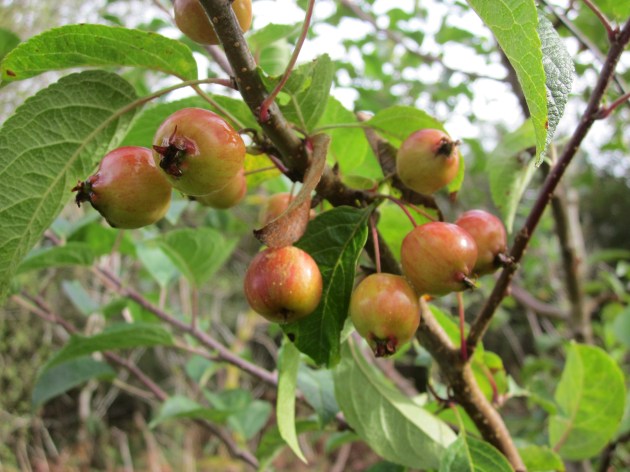
There are a few ornamental crab apples, but the crop of fruit here as elsewhere has been very poor.  The birds will need extra help this winter.

And, finally, this beech tree still glows, even against the grey sky.  All is not yet lost.  I can return indoors with my spirit refreshed.

• If you go down to the woods

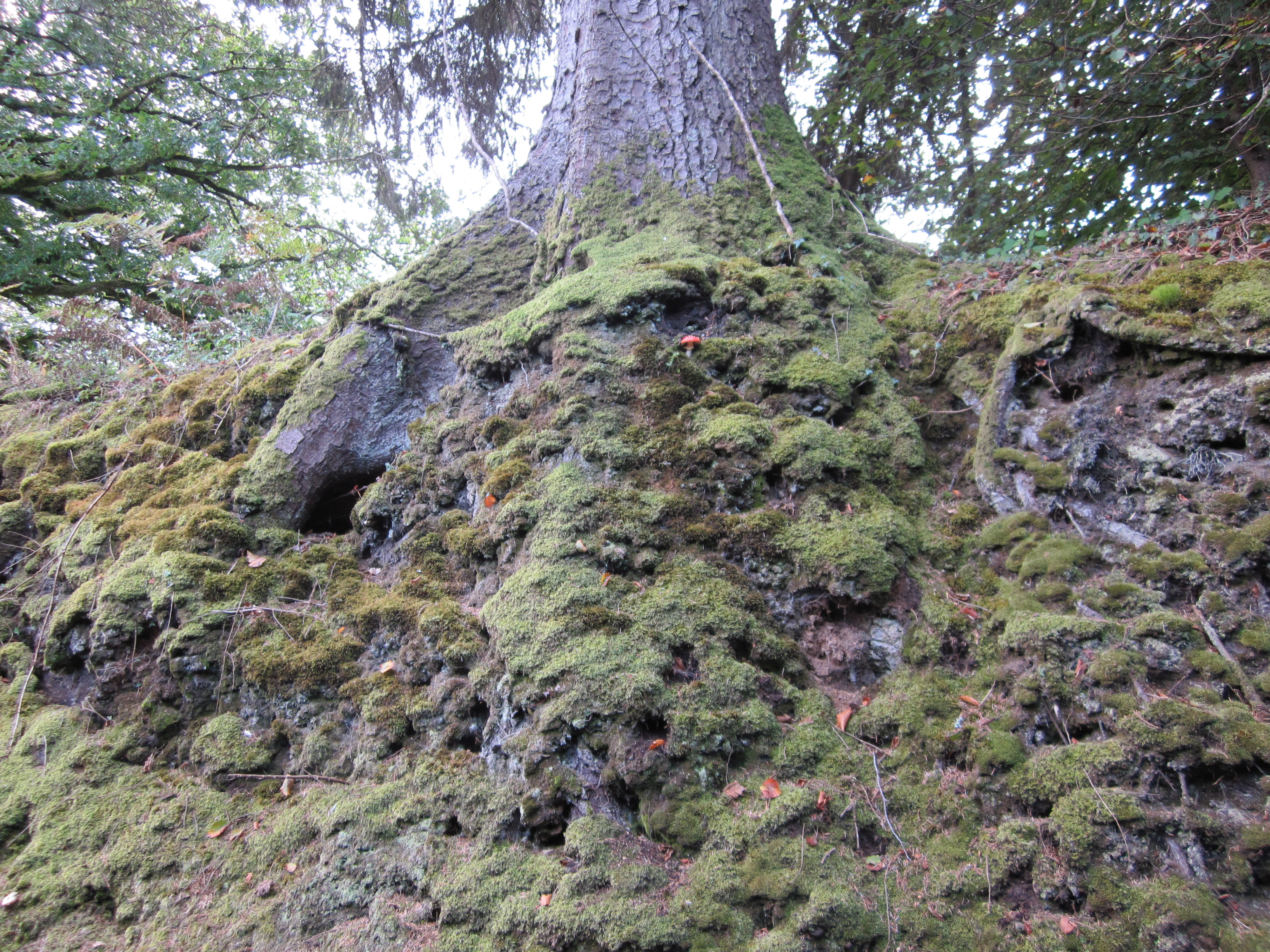
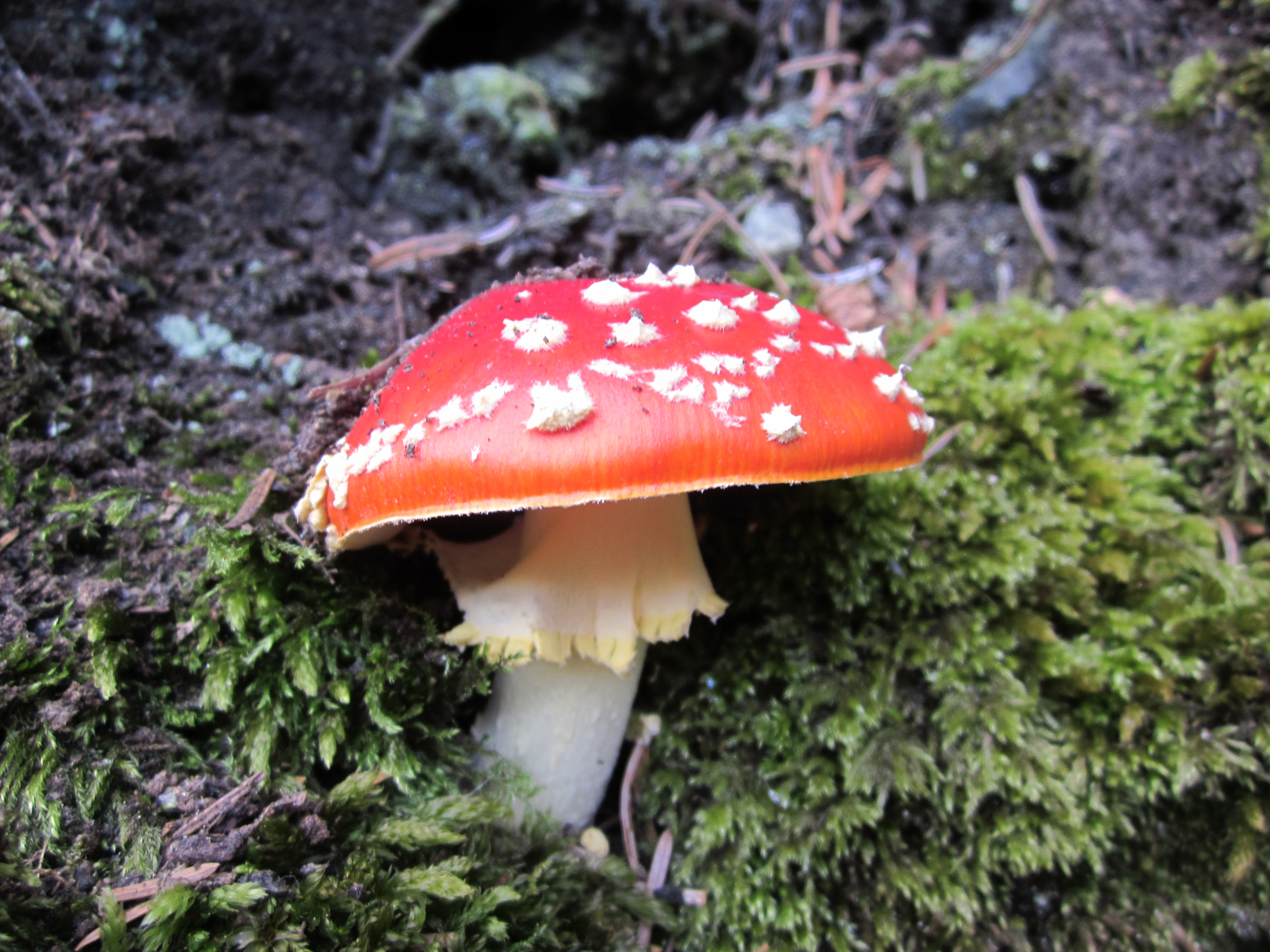
Look what my Ulster-Canadian friends and I spotted yesterday, down in the dell.  I didn’t see it at first, but then I clambered up for a closer look.   This adolescent Fly Agaric, with its flouncy underskirt, was mighty purty.
And hallucinogenic.  But we did see it; honestly.

• Spotted on Dinas Head

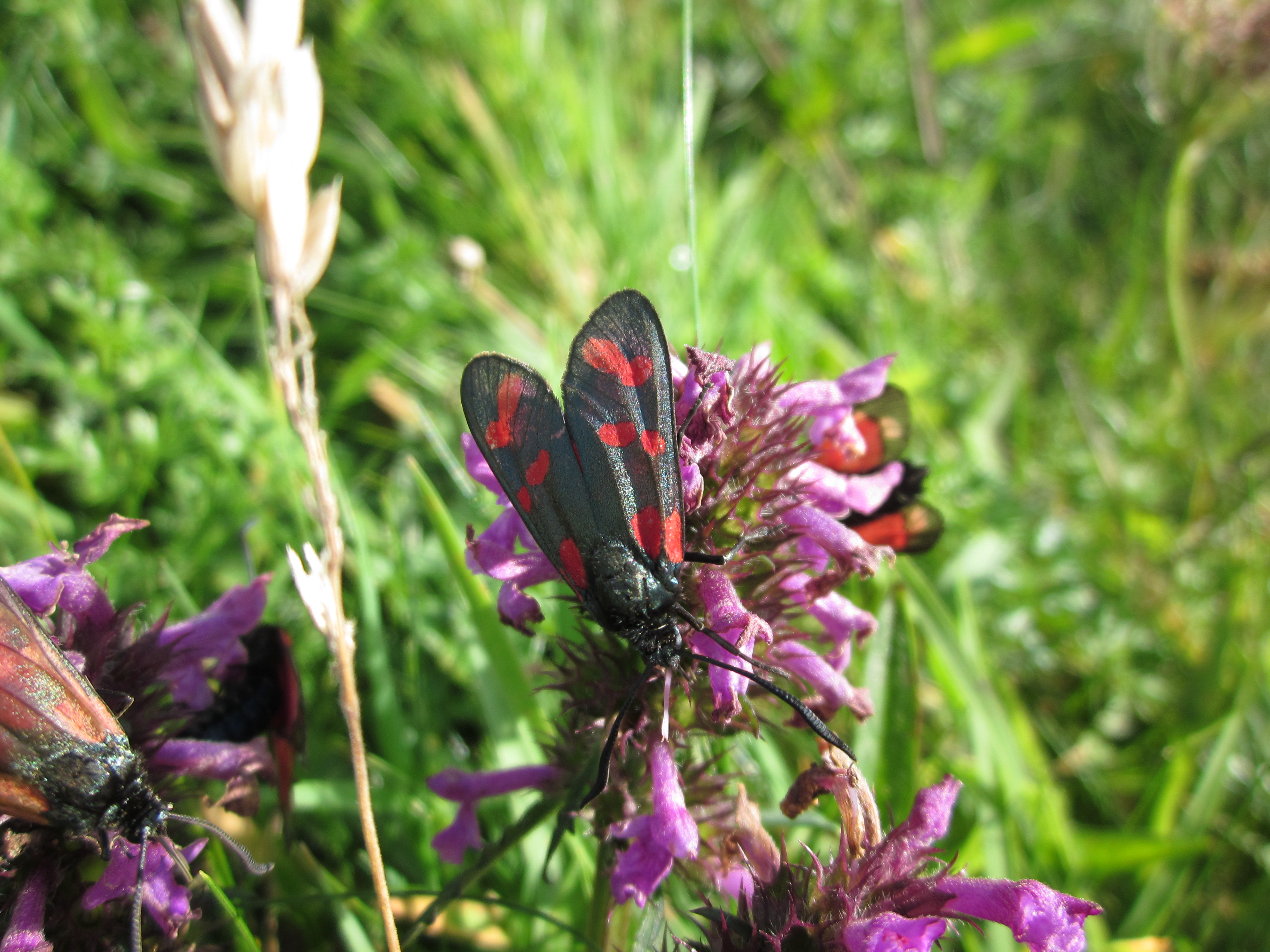
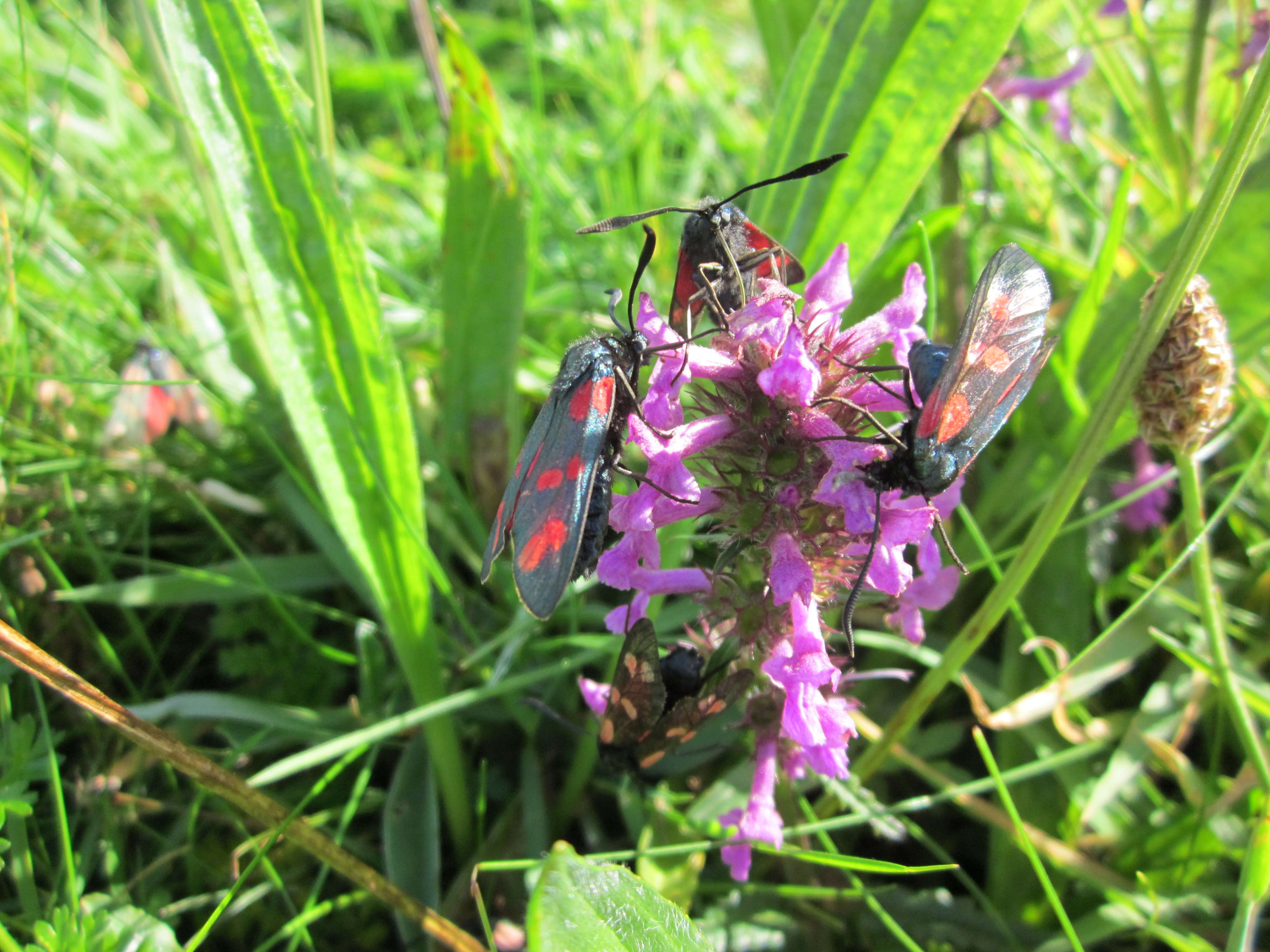
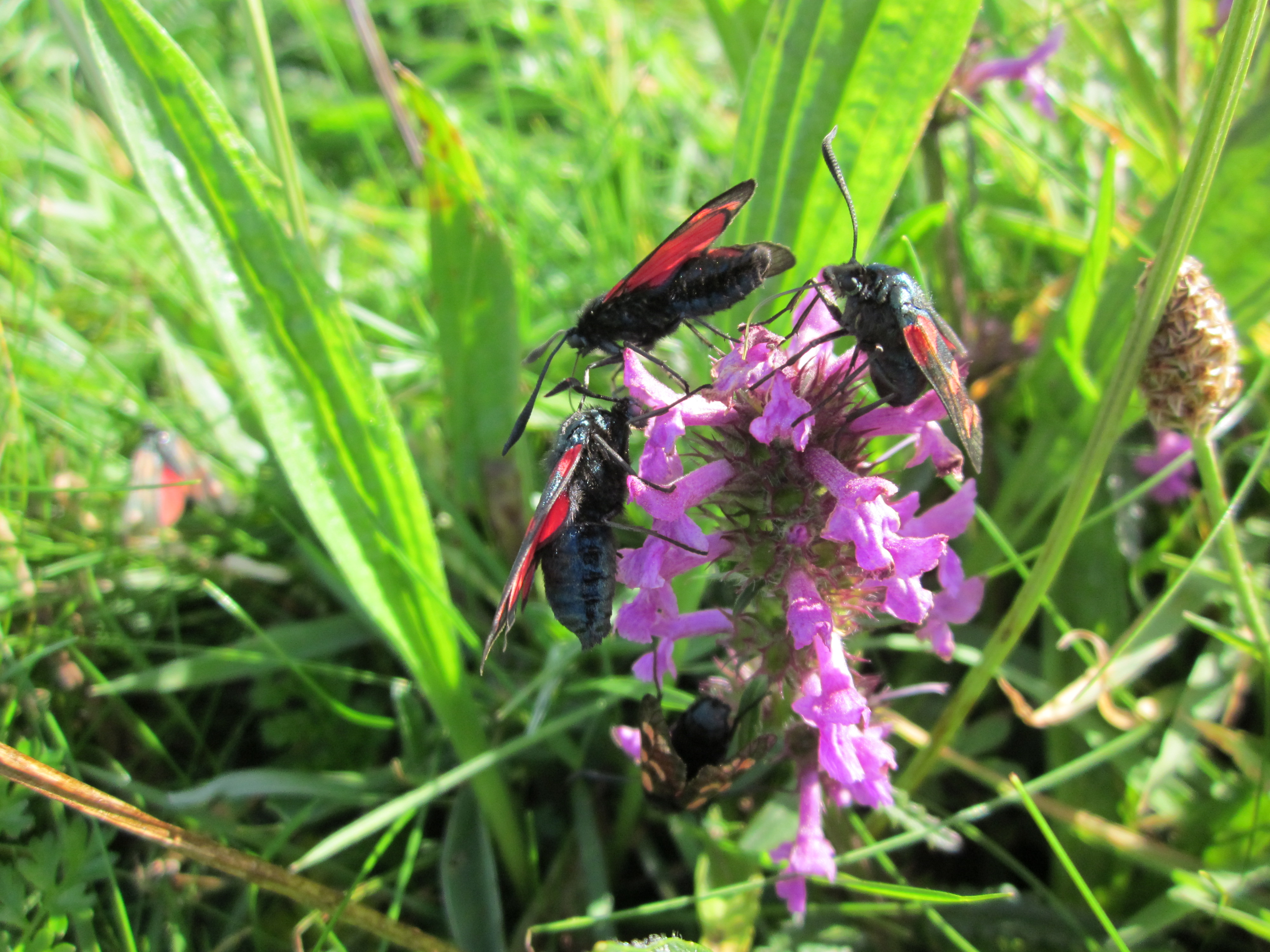
On our coastal walk yesterday, we came across a flurry of mothy activity: dozens of the day-flying Six-Spot Burnet. They’re very distinctive in their red-on-black colouring.  They were feeding on betony flowers like there was no tomorrow, sometimes four or five to a stem.  Here is a handful of shots taken, as usual, with my little Ixus camera. They’re a bit rough and ready, but you can clearly see the moths’ huge antennae with strangely-shaped tips, their long proboscises and legs and their shiny blue-black bodies.

• A Few Seaside Snaps

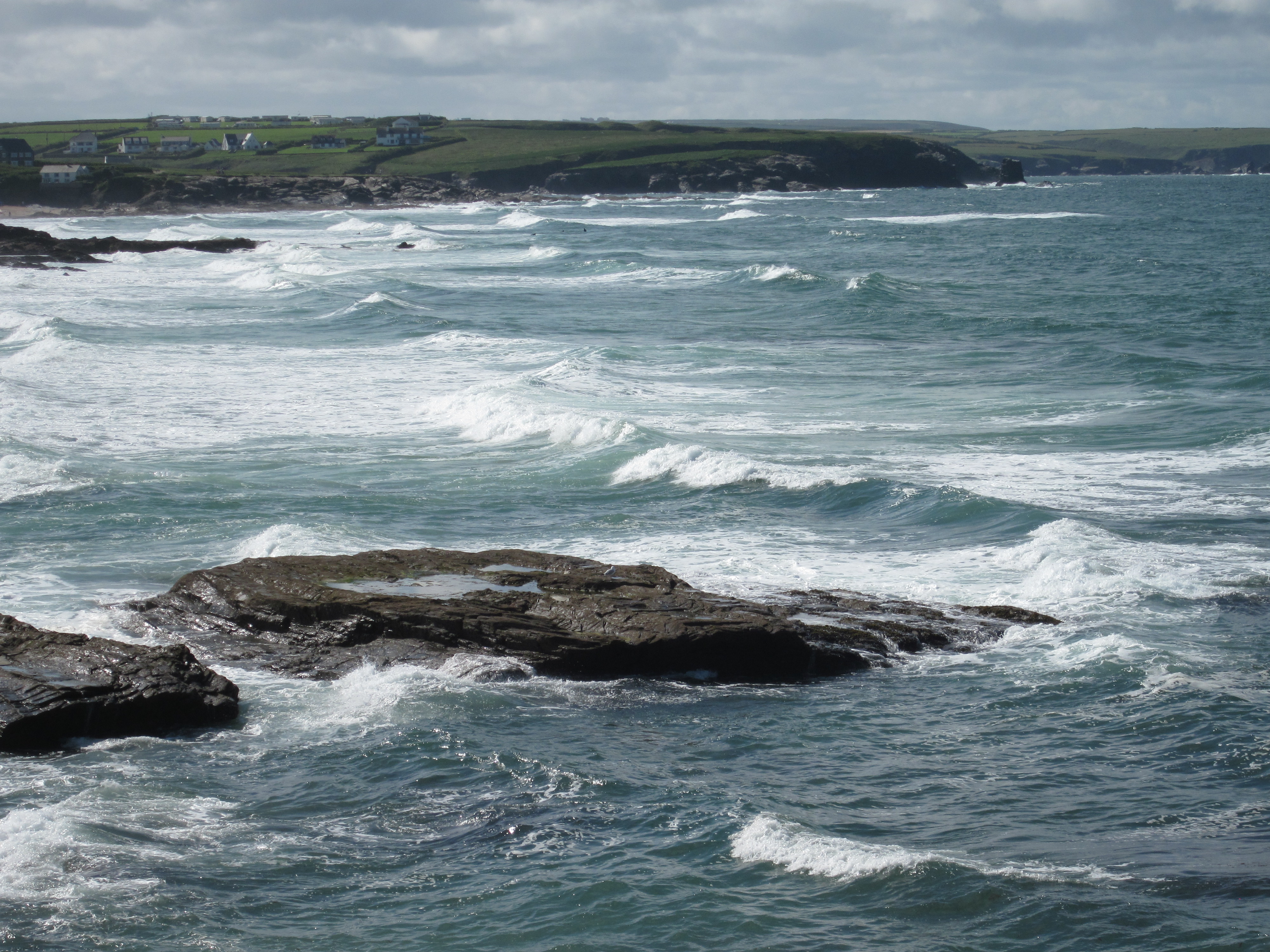
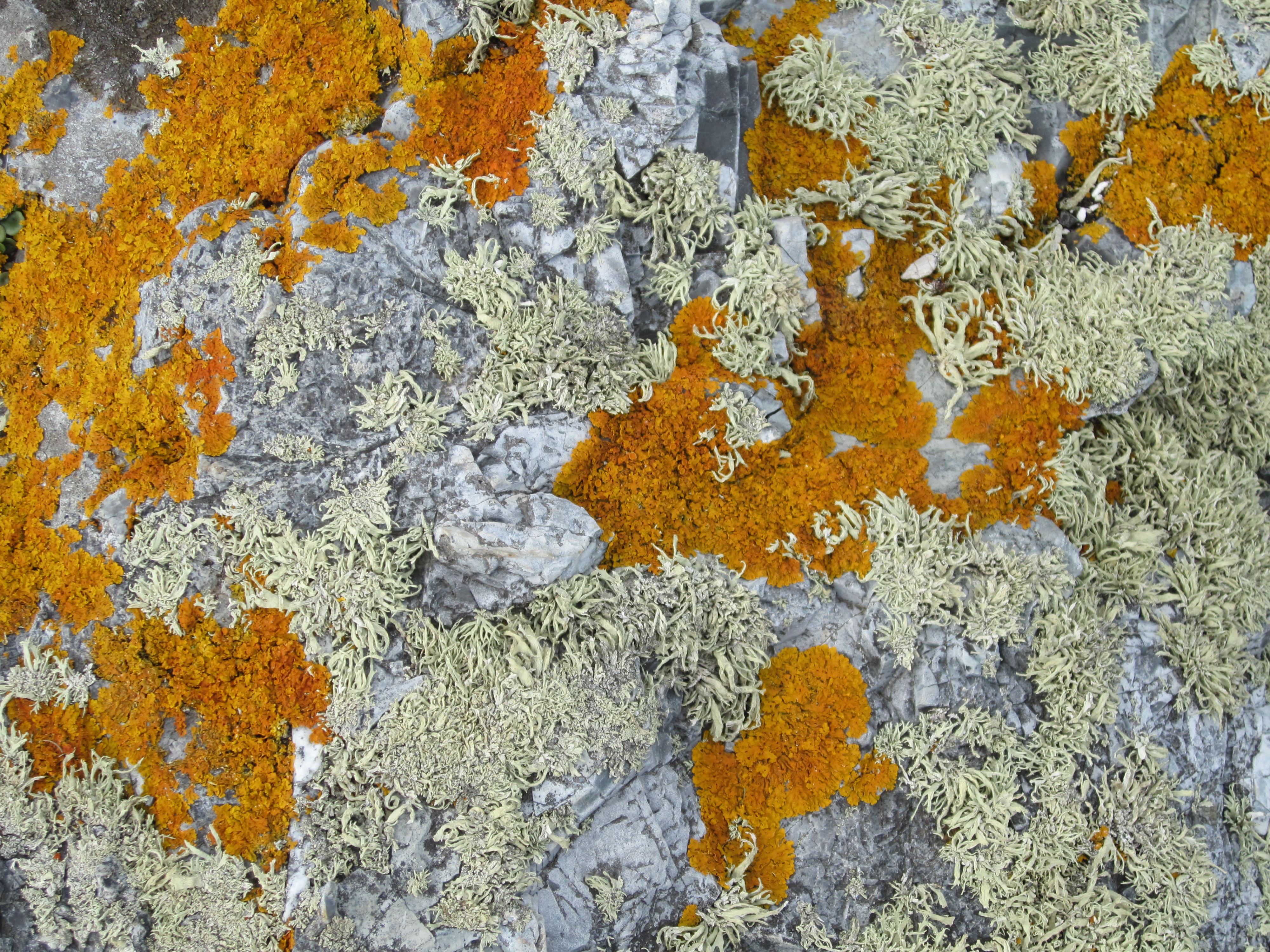
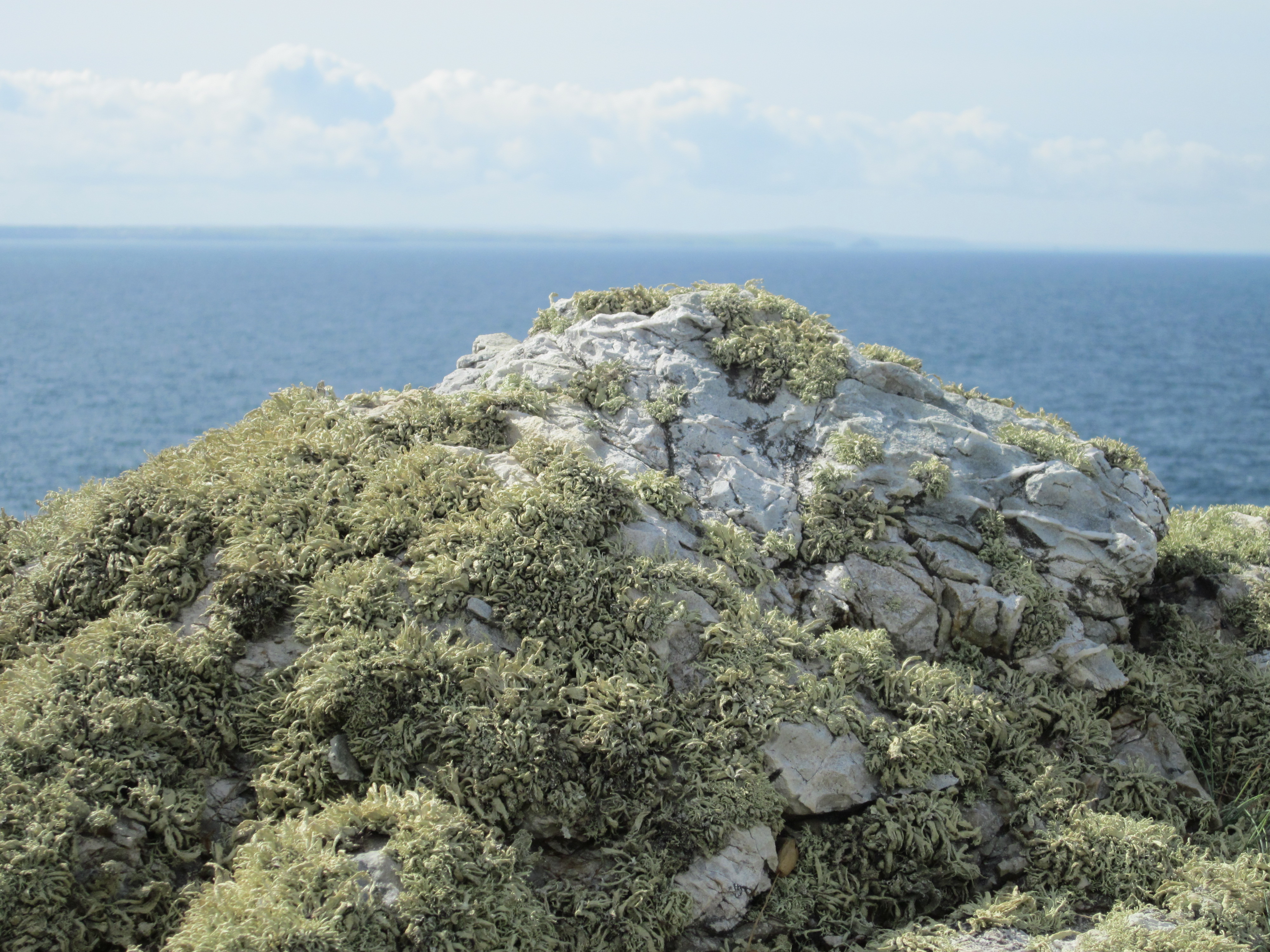
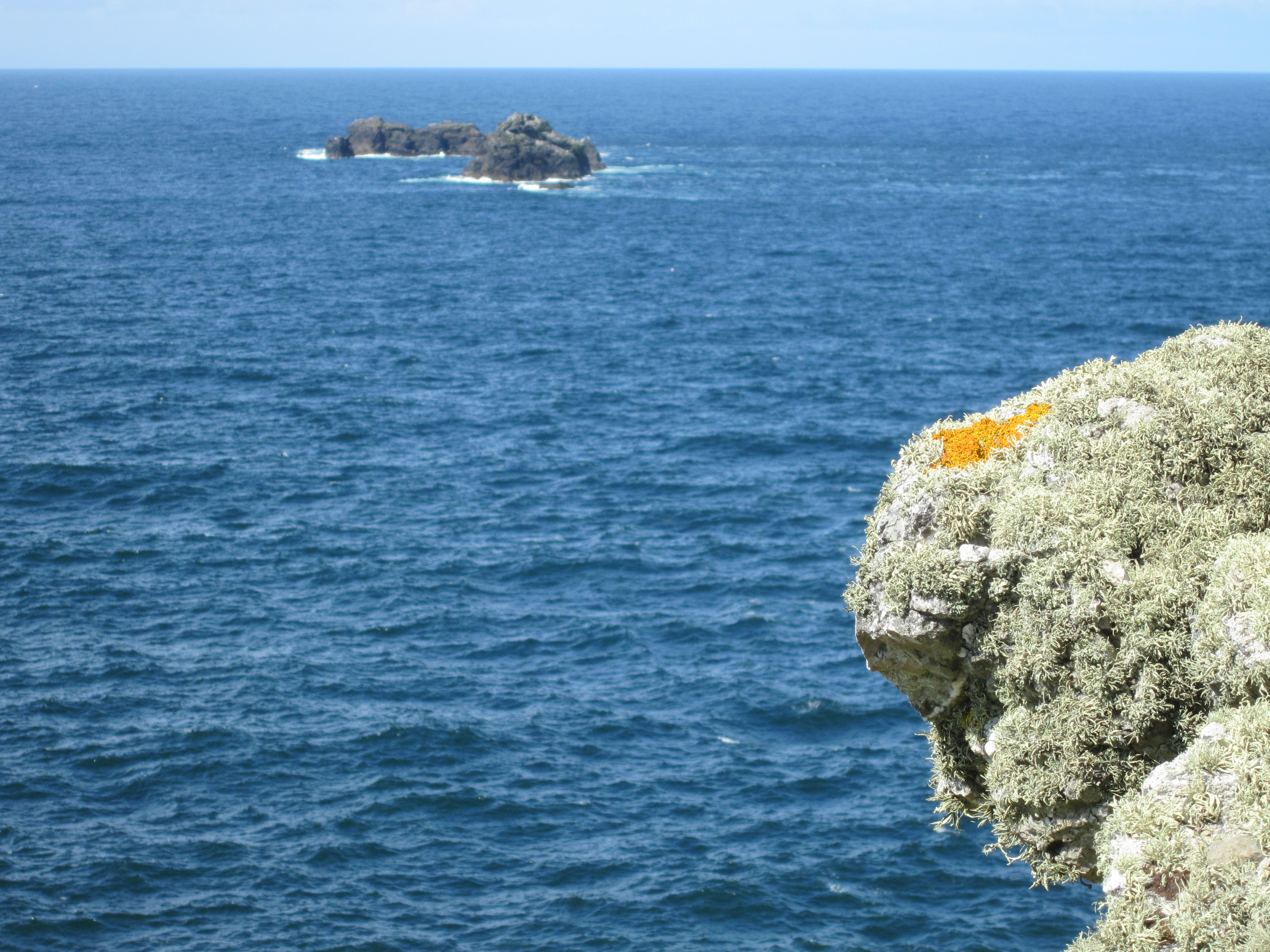
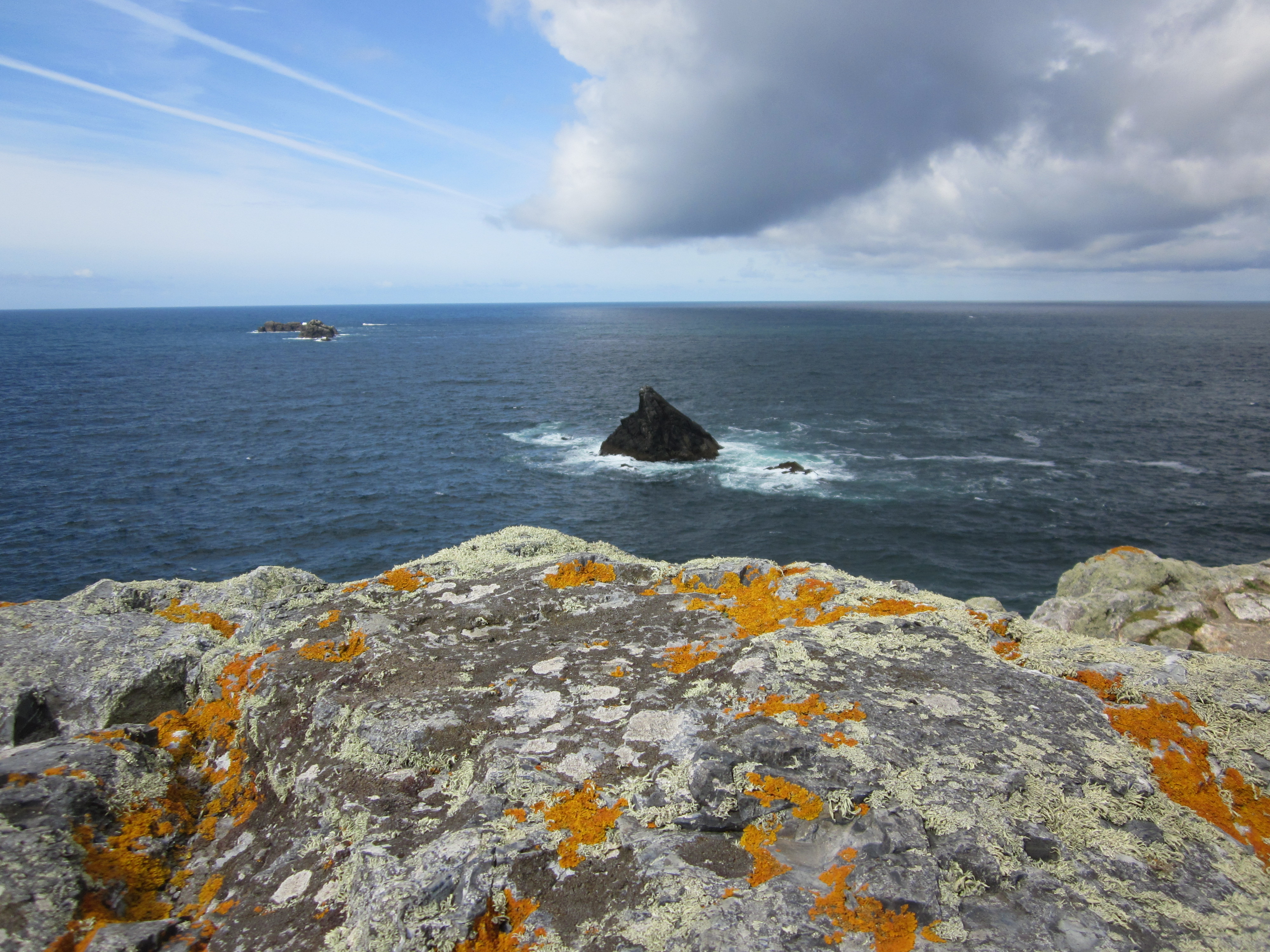
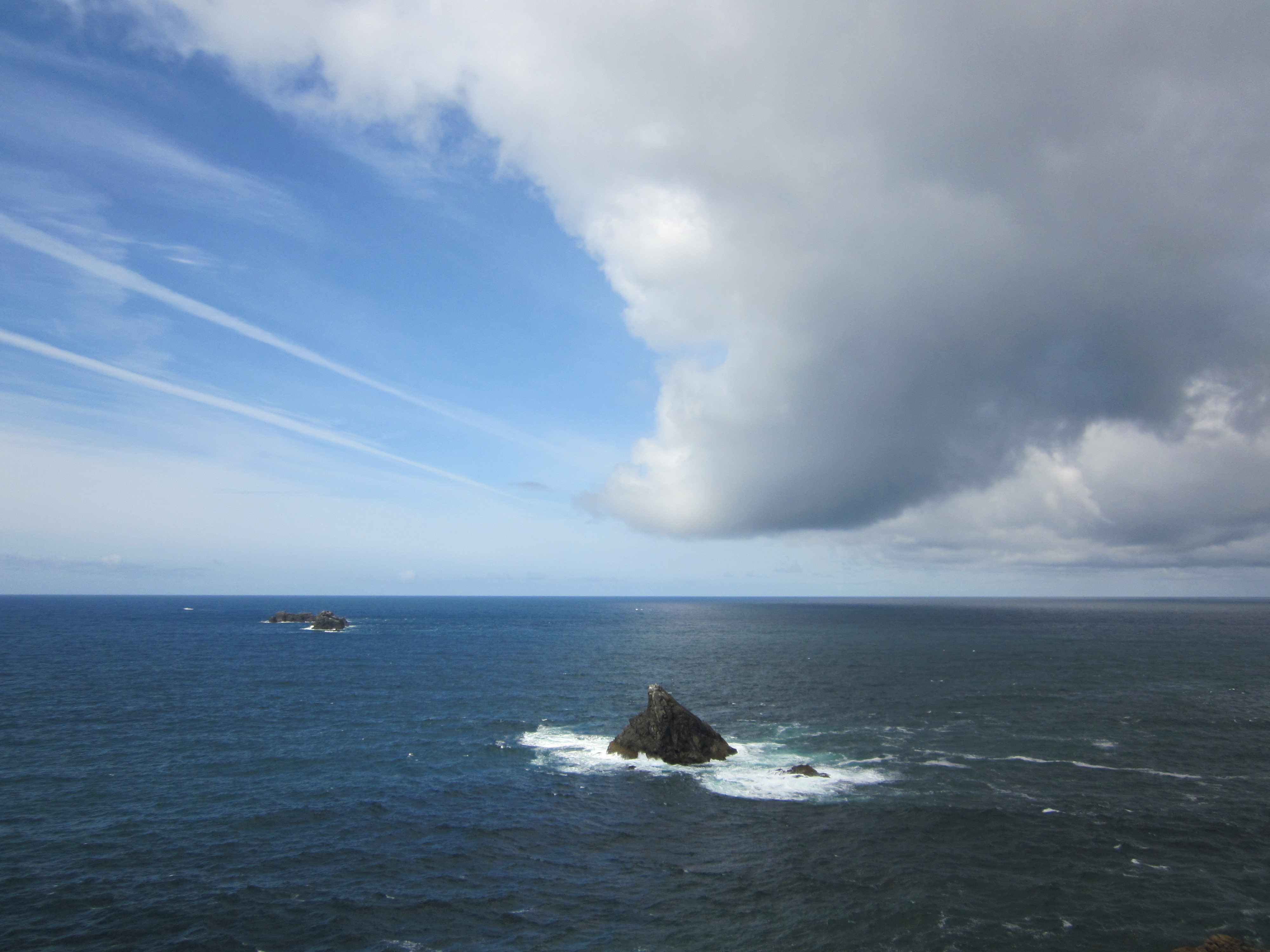
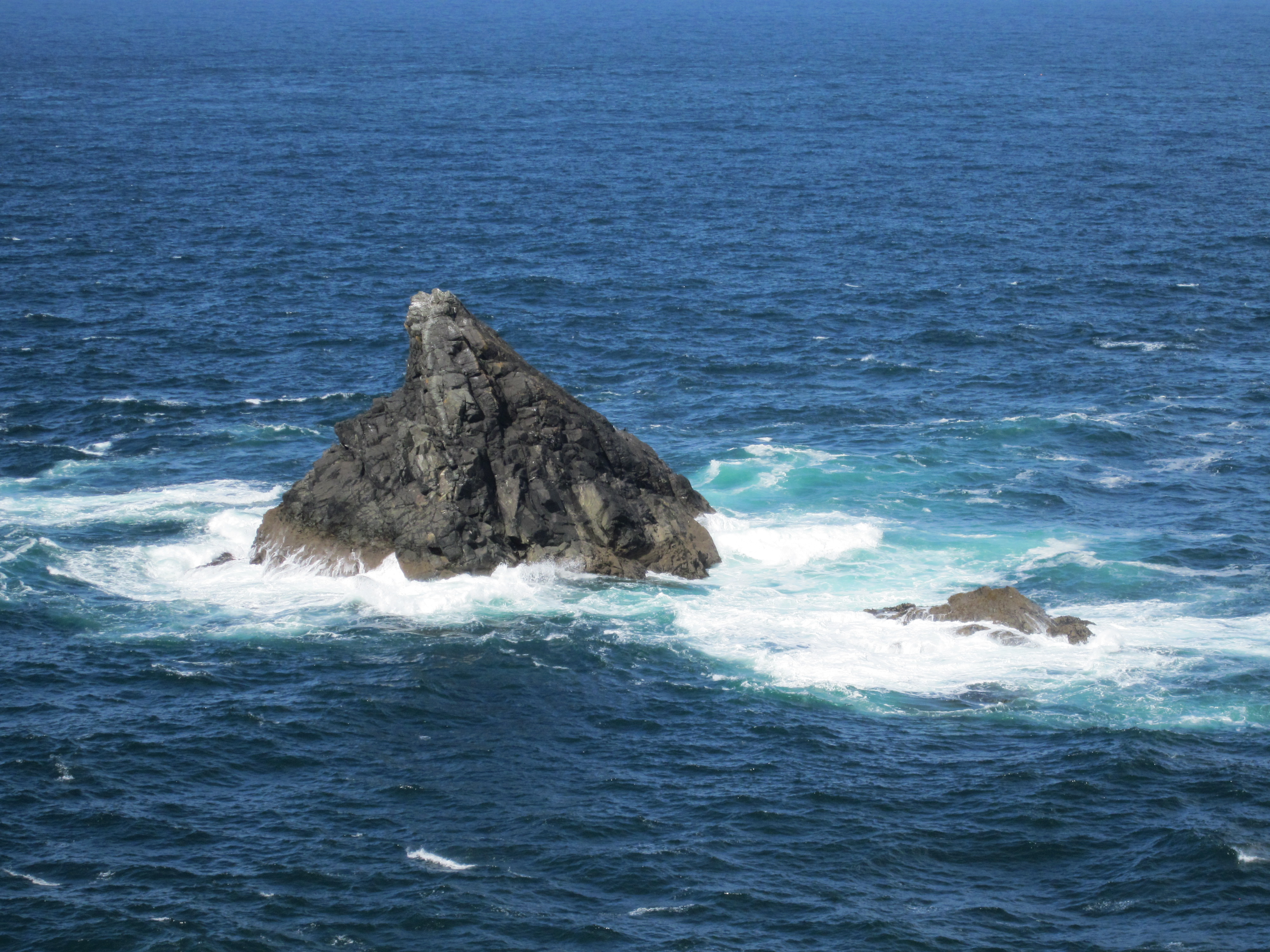
On the one dry day of this Bank Holiday weekend, when otherwise it was a case of hunkering down around a log fire indoors while the rain lashed outside (aaah), I took my friends Rolf and Chris to Dinas Head and Trevose Head, west of Padstow.  I love this walk, for its panoramic views west, north and east, for its geological formations, for its range of lichens, and for its changeable weather.  Yesterday, there was a mild breeze blowing in from the west.  On another occasion, I had to crawl on hands and knees at the top of Dinas Head, so strong was the gale. This time, we relaxed in the company of place-names such as Booby’s Bay, Round Hole, Quies, Stinking Cove and Mother Ivey’s Cottage.

A few seascapes, the first two at Booby’s Bay:

This one has the strangely named ‘Quies’ in the distance:

And a few close-ups:

Quies again:

Last, but not least, to my favourite outcrop at Dinas Head – The Bull – this time with fading vapour trails and a dramatic weather front.

• Wasp’s Nest

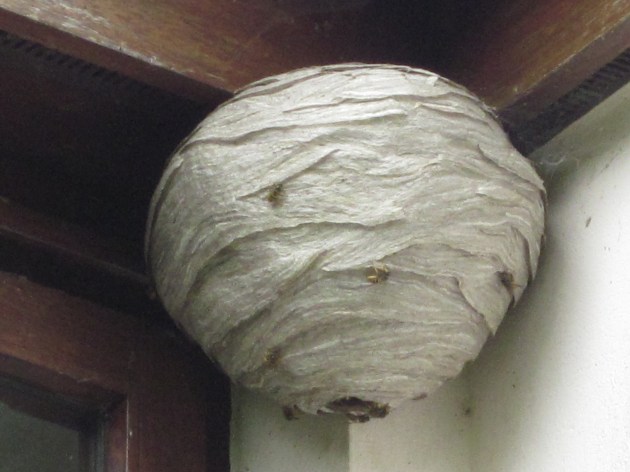
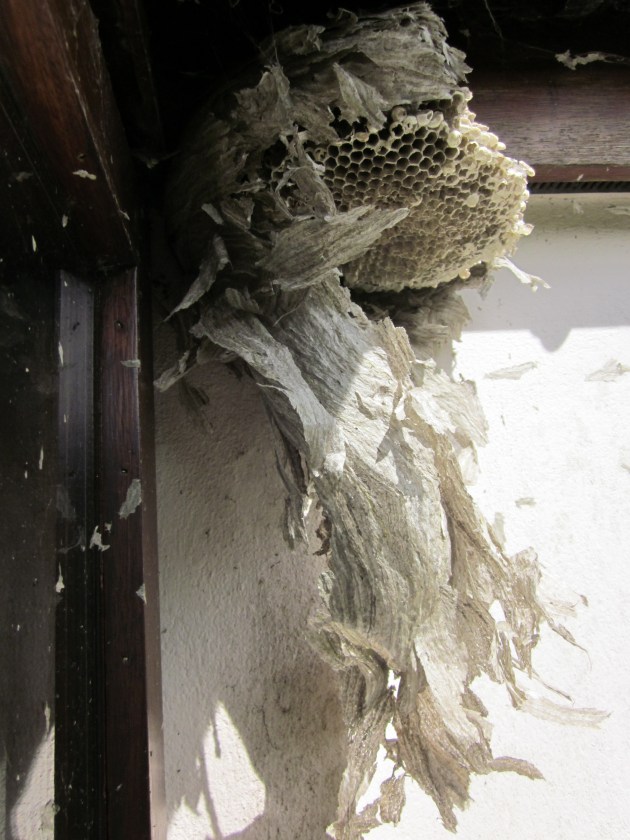
I’ve been away for a few days and have come back to find squatters.  To be fair, they’re squatting outside the house, but it’s the first time I’ve ever seen a wasps’ nest and I was initially quite anxious.  It is located in a corner under the guttering above the first floor.  I asked around as to how to deal with it.  One helpful friend suggested that I climb up a ladder, with a plastic bag to put over it and some shears to slice it off, followed by tying the bag up and descending.  I thought better of that.  After a while observing it, I could see that the wasps were not swarming loosely around the nest but making a bee-line (…) for it from quite some distance away and leaving in a similarly focused manner. There was no immediate danger, although I closed the nearby windows.

A wasps’ nest is a thing of great beauty, like a fine swaddle, its layers overlapping exquisitely.  It lasted over a month, but I came back after another trip away to find it destroyed and abandoned, its interior ‘comb’ exposed to the elements.

IMG_0305 copy

IMG_0569 copy

• Silence is Relative

Listening to the adventurous and surprisingly fulfilling radio experience of tonight’s John Cage Prom, I’ve been reminding myself of my own encounters with him and his music.
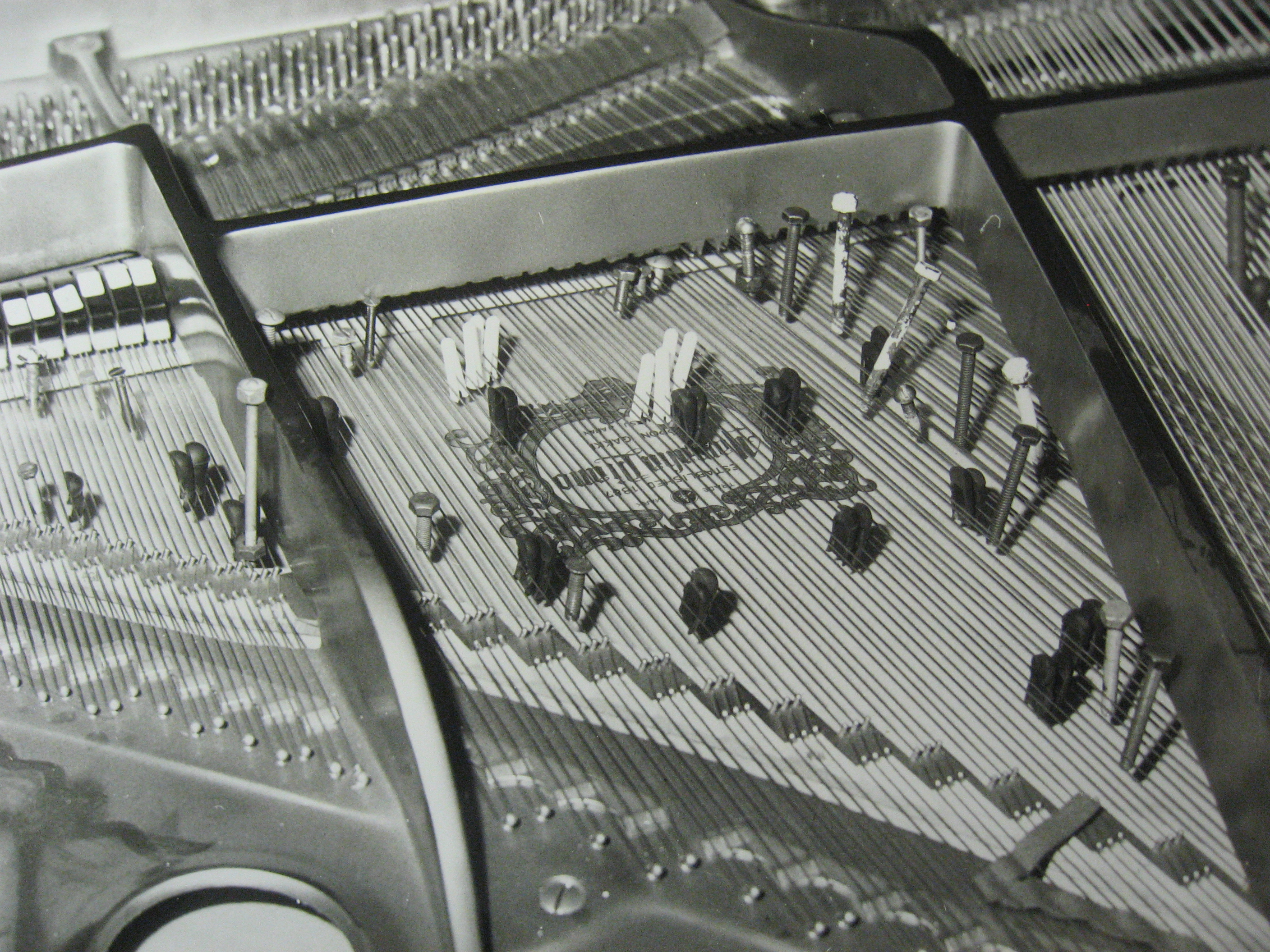
Back in the 1970s, when I was teaching at Queen’s University, Belfast, I performed Cage’s Sonatas and Interludes. This was a challenging proposition, not least interpreting his requirements for the preparation of the piano.  His list of inserted items was one of found objects, so I followed suit, using bolts, nuts, and other items that came closest to his own treasure hunt thirty years earlier.  Hence, as is clear from the photo above, plastic rawl plugs and the rubber feet of music stands, cut in half.  It was a memorable evening, at least for me, as the pitch relationship between keyboard and soundboard was contrary to custom and practice!

Later, in the early 1990s, when I was working at BBC Radio 3, I went to New York for the ‘Bang On A Can’ festival. Through my friends Julia Wolfe, Michael Gordon and David Lang, who founded the festival in 1987, I had an opportunity to meet Cage. His gentleness of spirit was legendary, and so it was on that occasion.  The only other composer who has come near to this, in my own experience, has been Jonathan Harvey.  Both have a profound spiritual and philosophical understanding that makes my interest in Zen Buddhism mere dabbling.

The encounter with Cage that made the most impact took place when I was much younger, when I was an undergraduate.  With my fellow student Jolyon Laycock, I made a trip down to London to spend an afternoon with John Cage and his longtime collaborator, the pianist David Tudor.  The venue was a large theatre, now the multi-screen Odeon Cinema, in Shaftesbury Avenue.  We sat in the Gods, looking down on Tudor operating ring-modulation equipment in the pit and a quasi drawing-room on stage.  There were two rows of small pictures, one above the other, in identically sized frames hanging across the stage and with an armchair in front.

On came Cage, book in hand.  Silence.  He sat down and began to read.  Within a minute, Tudor started to apply ring-modulation to Cage’s voice and soon the text became unintelligible.  We were participating in a happening with John Cage.  It felt as if we were in the vortex of contemporary music and culture.  I have no idea how long the event lasted – maybe two hours?  I remember the audience becoming increasingly agitated, shouting, whistling, throwing their programmes in the air.  It was mayhem, in which Cage and Tudor, cool as cucumbers, did what they set out to do.  Then, without warning, Cage got up and walked off.  The end.

Or so I thought.  We emerged onto Shaftesbury Avenue at rush hour.  But such had been the torrent of sound inside the theatre that I heard no traffic noise.  There was silence at that moment.  Although this impression was transient, its aesthetic significance was profound.  And I remain eternally grateful Cage for this simple gift of enlightenment.